
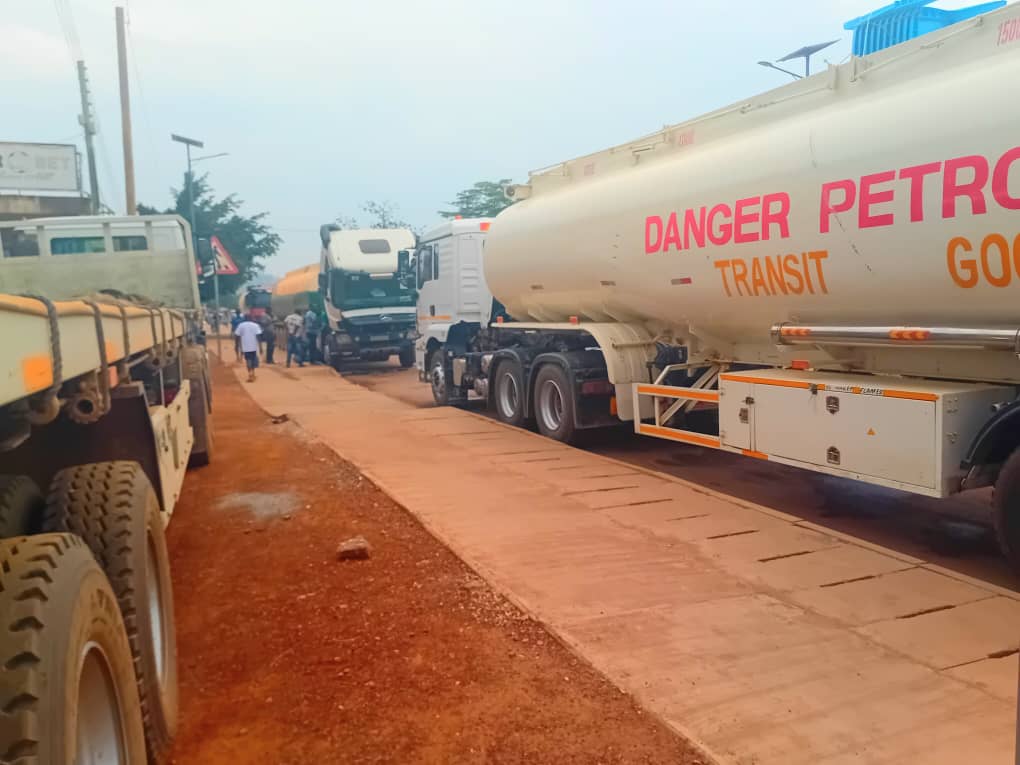
Nebbi Municipal Council is set to lose more than Shs3 million in monthly parking revenue after announcing plans to evict transit trucks from the main street by the end of this month.
However, authorities say the decision is necessary to improve public safety and decongest the central business district.
The directive will affect roadside food vendors, mechanics, tyre repairers and other informal businesses that depend heavily on truck drivers for daily income.
Some traders have warned of “hunger” and possible business closures if the ban is enforced.
Council says the one-month ultimatum given to truck drivers is intended to ease congestion in the town centre, where more than 20 trucks are often parked along both sides of the main road, leaving limited space for boda boda riders, pedestrians and other motorists.
Officials argue that the situation has increased the risk of accidents and disrupted the flow of traffic in the central business district.
However, roadside vendor John Prosperity Okurmu said the decision would have a severe economic impact on traders and service providers who rely on truck drivers.
“Truck drivers inject a lot of money each time they park. A driver can spend not less than 200,000 shillings on food, drinks and mechanical services, boosting the local economy,” Okurmu said.
“Parking alone is money to those who collect fees. More than 20 trucks, mostly from Congo, come here daily,” he added.
He said previous evictions of kiosks in town had already reduced business activity and warned that removing trucks would worsen the situation.
Okurmu urged the council to first establish an alternative parking facility equipped with clean water, sanitation, electricity and affordable rental lockups to accommodate truck drivers and associated services.
Currently, vendors pay about Shs2,000 daily to the council, while vehicle owners pay between Shs3,000 and Shs5,000 depending on vehicle type and duration of stay.
Truck drivers, however, are considered the biggest contributors, with about 20 trucks reportedly paying around Ss5,000 each per day.
According to Emmanuel Ocaya, chairperson of Nebbi taxi operators who were recently awarded a tender to collect parking fees, truck drivers contribute the largest share of daily revenue.
“On a daily basis, we can collect more than Shs50,000, but without the truck drivers I wonder how much we would collect,” Ocaya said.
“We pray that amidst the Ebola situation trucks are not stopped from moving, otherwise we shall be doomed. They give us more than any other clients. Without them, we may run into losses and fail to recover what we paid for the tender,” he added.
The taxi operators reportedly paid Shs3 million for a three-month contract to collect parking fees. While current collections appear profitable, operators say the removal of trucks could significantly reduce returns.
Critics argue that the council is prioritising congestion concerns over livelihoods and revenue generation, suggesting that safety issues could instead be addressed through sensitisation of pedestrians and boda boda riders.
They also point out that no major accidents have been directly attributed to truck parking along the roadside.
Howard Musa, Deputy Mayor and leader of council business, defended the decision, saying taxi operators had assured the municipality of alternative arrangements.
“When the taxi operators approached us for the tender, they assured us that they had alternative parking space within the town and promised they would handle any eventualities,” Musa said.
“We gave them a month to continue collecting parking fees from trucks within town. After that period, we shall enforce the ban,” he added.
He said alternatives such as the lorry park and privately owned parking spaces could be explored to accommodate displaced trucks.
If implemented, the eviction is expected to significantly reduce municipal revenue from parking fees while also disrupting a local economy heavily dependent on truck drivers passing through Nebbi.
Traders warn that many small businesses could be forced to close or relocate if no alternative arrangements are made.
